Categories
Research Update

Active faulting and earthquake hazards in the Toktogul basin. A report from fieldwork in Kyrgyzstan, 2024

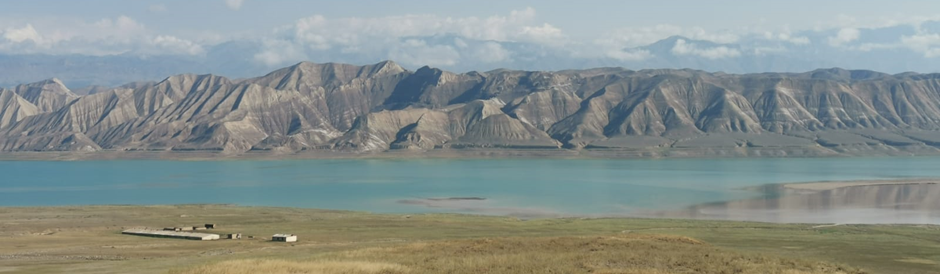
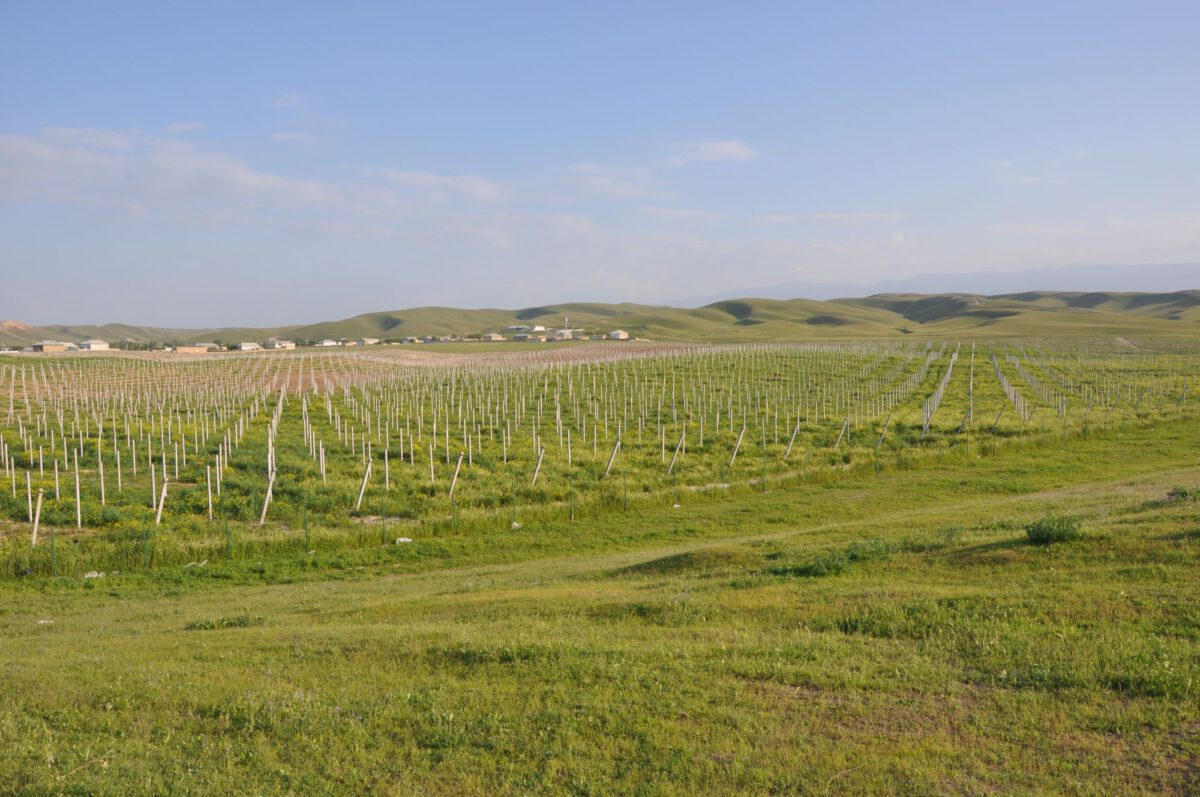
Active folding along the northern side of the Toktogul basin, viewed across the reservoir that occupies much of the basin interior.

A joint team from Oxford, the Institute of Seismology in Bishkek, and the National Nuclear Center in Almaty undertook several weeks of fieldwork in July and August of 2024, within the framework of our NATO SPS project on environmental security in the Tien Shan. Our particular interest in this field project was to investigate evidences for active faulting and to assess the types and frequency of earthquakes that might occur on faults in the Toktogul basin. The main road connecting North and South Kyrgyzstan passes through this valley, and there are several existing and proposed hydropower plants along the Naryn river. Understanding the distribution of active faults, the styles and magnitudes of earthquakes, and the timing of past events is therefore important for estimating earthquake hazard to the infrastructure, as well as to local populations.
Categories
Research Update

1st Environmental Hazards in Asia Conference

The first Environmental Hazards in Asia Conference will take place in Ulaanbaatar, Mongolia, from 12-15 August with a field trip from 16-20 August. This conference aims to bring together practitioners of both with a focus on the hazards across Asia. The workshop will be structured to allow exploration of the underlying physical mechanics of hazards, explore the impacts of historical events across the continent and focus on the possible approaches to minimizing future impacts. The aim is to facilitate new ideas and proposals. Funds to support travel and subsistence to up to 20 participants from across Asia are available.

May 15th – Abstract submission deadline
June 1st – Fieldtrip registration deadline
July 12th – Online registration deadline

Meeting website: www.environmentalhazardsasia.wordpress.com

Categories
Research Update

Giant landslides of the Tien shan

Julie Losen describes her recently published article presenting the first results of the analysis of the giant Beshkiol landslide and its associated lakes in Kyrgyzstan. The work is now published in the journal ‘Geomorphology’

https://www.sciencedirect.com/science/article/abs/pii/S0169555X24000710

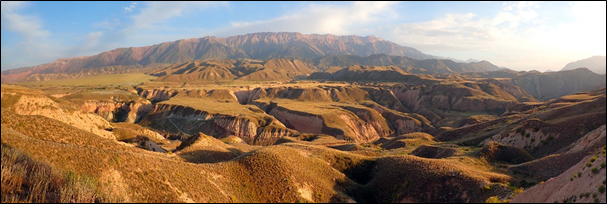
Panoramic photo of the Beshkiol landslide.
Categories
Research Update

Earthquakes and tectonics of the Kura basin, Azerbaijan

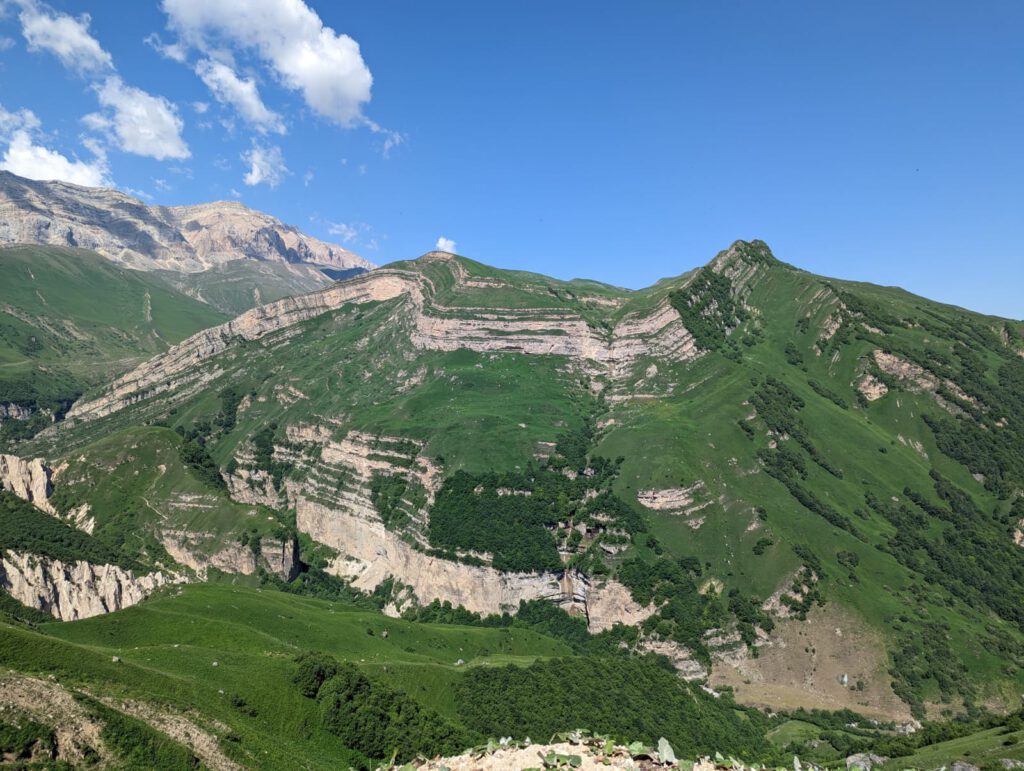
Ian Pierce describes his recent field trip to Azerbaijan, excavating trenches along the southern Caucasus thrusts and looking for evidence of historical earthquakes.

Categories
Research Update

Palaeoseismology and archaeoseismology along the Silk Roads of Uzbekistan

Krzysztof Gaidzik describes his recent experiences searching for past earthquakes and active faults as part of the Earthquakes in Central Asia project.

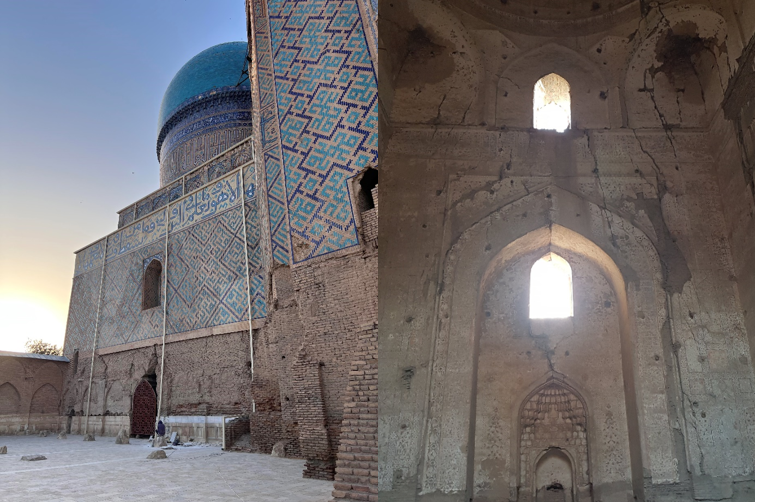
Bibi-Khanym Mosque strongly damaged during the 1897 earthquake.
Categories
Research Update

Combining palaeoseismic and archaeological records along the Silk Roads of Uzbekistan

In March 2022 we spent a week in Uzbekistan discussing projects and undertaking field investigations in collaboration with the Institute of Seismology, National Academy of Sciences.

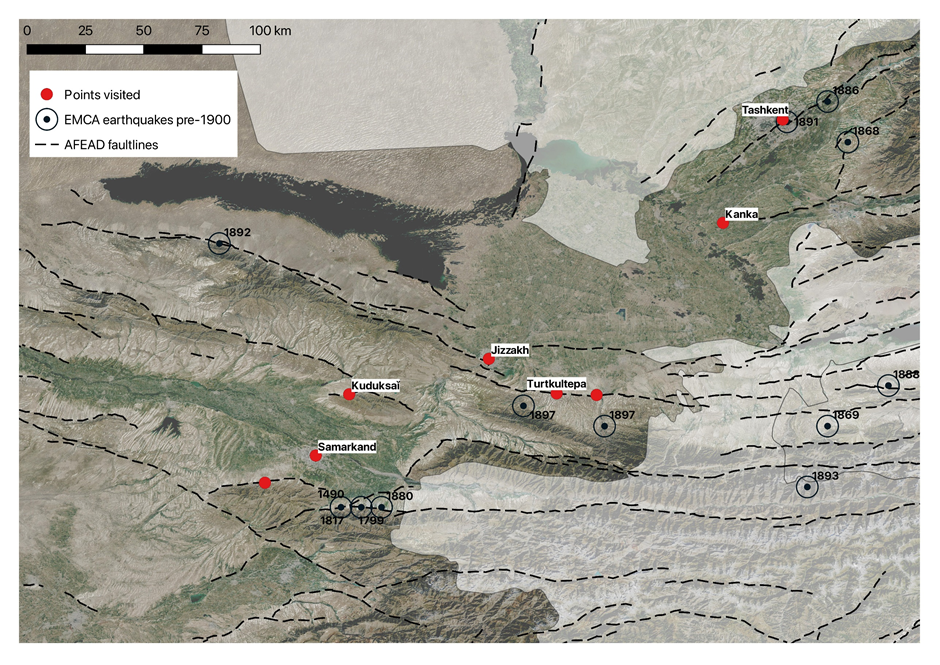
Map of the sites visited during our trip along with active faults from the AFEAD database and historical earthquakes from the EMCA database.

Uzbekistan is sited at the westernmost margin of the Tien Shan ranges, with environments ranging from high mountains along the borders with Kyrgyzstan and Tajikistan through to desert in the west. There is a proven widespread earthquake hazard, with examples of destructive earthquakes including an event in 1966 that caused widespread destruction in the capital city of Tashkent.